Showing posts with label Security. Show all posts

Monday, December 21, 2009

Software Vulnerability Guide


The Software Vulnerability Guide focuses on the origin of most software vulnerabilities, including the bugs in the underlying software used to develop IT infrastructures and the Internet. Most of these security bugs (and the viruses, worms, and exploits that derive from them) started out as programmer mistakes. With this easy-to-use guide, professional programmers and testers will learn how to recognize and prevent these vulnerabilities before their software reaches the market. For each of the 30 common software vulnerabilities featured the authors provide a summary, description of how the vulnerability occurs, and famous examples of how it has been used. Tips on how to find and fix the vulnerability in software are also provided along with source code snippets, commentary, tools, and techniques in easy-to-read sidebars.

* Includes coding examples in a variety of languages, including C, C++, Java, VB, .NET, scripting languages, and more
* Provides tips for uncovering vulnerabilities in a diverse array of systems, including what it may look like in code, and how the offending code can be fixed
* Covers vulnerabilities such as permitting default or weak passwords, cookie poisoning, exchanging sensitive data in plain text, leaving things in memory, and format string attacks
* Includes a CD-ROM with all of the source code, as well as many freeware/shareware tools discussed in the book

Download here.

Monday, December 14, 2009

Sams Teach Yourself Microsoft Expression Web 3 in 24 Hours


In just 24 sessions of one hour or less, you’ll learn how to build flexible, easy-to-maintain, standards-based websites with Microsoft Expression Web 3. Using this book’s straightforward, step-by-step approach, you’ll master the entire process, from concept through delivery. You’ll learn powerful ways to plan, design, construct, and even redesign websites that are simple to manage and easy to repurpose. Each lesson builds on what you’ve already learned, giving you a strong real-world foundation for success, no matter what kind of site you’re building!

*
Step-by-step instructions carefully walk you through the most common Expression Web 3 tasks.
*
Quizzes and Exercises at the end of each chapter help you test your knowledge.
*
By the Way notes present interesting information related to the discussion.
*
Did You Know? tips offer advice or show you easier ways to perform tasks.
*
Watch Out! cautions alert you to possible problems and give you advice on how to avoid them

Learn how to…

* Build your first Expression Web 3 website in just five minutes
* Establish work processes for building standards-based sites faster, with far less work
* Write error-free code quickly and easily with Code view and IntelliSense
* Create hyperlinks that simplify navigation, perform actions, and send commands
* Understand, create, and modify CSS style sheets with unprecedented speed and accuracy
* Use Dynamic Web Templates to consistently format (or reformat) hundreds of pages
* Implement state-of-the-art interactivity with buttons, behaviors, and Cascading Style Sheets (CSS)
* Publish simple Silverlight applications and add multimedia content from Flash and other sources
* Build advanced drop-down and other CSS-based menus from scratch
* Learn how and when to use each of Expression Web’s six publishing options
* Integrate web application code written in ASP.NET or PHP

Download here.
http://socifiles.com/d/c9870d

JBoss RichFaces 3.3

JBoss

RichFaces is a rich component library for JavaServer Faces and an AJAX framework that allows easy integration of AJAX capabilities into complex business applications. Do you wish to eliminate the time involved in writing JavaScript code and managing JavaScript-compatibility between browsers to build an AJAX web application quickly?

This book goes beyond the documentation to teach you how to do that. It will show you how to get the most out of JBoss RichFaces by explaining the key components and how you can use them to enhance your applications. Most importantly, you will learn how to integrate AJAX into your applications without using JavaScript but only standard JSF components. You will learn how to create and customize your own components and add them to your new or existing applications.

What you will learn from this book?

* Create a simple project using the seam-gen tool, with the support of RichFaces, Seam and Facelets
* Integrate the RichFaces libraries manually in your existing JSF project
* Import a seam-gen-generated project into your workspace using Eclipse
* Get AJAX JSF messaging support for JSF AJAX events using RichFaces message and messages components
* Learn the basics of RichFaces, from creating the project to editing the code, using important components (like a4j:commandButton, a4j:commandLink, rich:dataTable, and rich:messages) and their AJAX properties (like reRender)
* Develop a fully-featured advanced application for contact management using the RichFaces AJAX framework and its rich components
* Develop the login and registration system for a web site
, looking at all the features like skin management, registration page, login box, forgot username, reset password, captcha, and more
* Optimize AJAX requests while developing a web application with JBoss RichFaces
* Add and remove contacts from a group using the RichFaces drag-n-drop support
* Customize the look of the application by changing the style of its existing skins using CSS and XCSS
* Create new skins ready to be plugged into your application
* Use and implement pushing, partial updates, component binding, session expiration handling, and more
* Develop rich JSF components in a fast and solid way using CDK (Component Development Kit)

Download here.
http://socifiles.com/d/1eea32

Sunday, December 6, 2009

Professional Web 2.0 Programming


Web 2.0 architecture opens up an incredible number of options for flexible web design, creative reuse, and easier updates. Along with covering the key languages and techniques of Web 2.0, this unique book introduces you to all of the technologies that make up Web 2.0 at a professional level. Throughout the chapters, you’ll find code for several example applications built with popular frameworks that you’ll be able to utilize.

You’ll first explore the technologies that are used to create Web 2.0 applications. This includes an in-depth look at XHTML, Cascading Style Sheets (CSS), JavaScript, and Ajax. Next, you’ll gain a better understanding of the protocols and formats that enable the exchange of information between web clients and servers. Ultimately, you’ll discover exactly what you need to know about server-side programming in order to implement new ideas and develop your own robust applications.
What you will learn from this book
  • How Web 2.0 applications are developed
  • New ways to get the major client-side technologies to work together
  • The new class of emerging tools
  • All about HTTP and URIs, XML, syndication, microformats, and Web Services
  • Techniques for implementing and maintaining your URI space
  • How to serve XML over HTTP
  • Steps for building mashups to aggregate information from multiple sources
  • Methods for enhancing security in your applications
Download here.

Monday, November 30, 2009

Publications Security in an IPv6 Environment

Analyze Key Security Mechanisms and Approaches with this practical primer, the first book on the market to cover critical IPv6 security considerations.


Dan Minoli, author of over 50 books on telecommunications and networks, and Jake Kouns, Chairman, CEO and CFO of the Open Security Foundation, discuss IPv6 security vulnerabilities, considerations, and mechanisms, and survey approaches for ensuring reliable and controlled IPv6 migration. The authors pool knowledge from industry resources, RFCs, and their own considerable security experience, discussing key IPv6 features, security issues, and potential exploitation of IPv6 protocol. They examine use of firewalls and encryption, and the fundamental topic of IPSec in IPv6 environments.

Protect Networks from New and Growing Threats

An increasing amount of mission-critical commercial and military operations are supported by distributed, mobile, always-connected, hybrid public-private networks, especially IPv6-based networks. The number of attackers or inimical agents continues to grow, and all computing environments must feature high-assurance security mechanisms. Even administrators in pure IPv4 environments require at least a rudimentary understanding of IPv6 security principles to safeguard traditional networks. This comprehensive book explains why security savvy approaches are indispensible and includes considerations for mixed IPv4 and IPv6 migration environments. More than an exhaustive treatment of IPv6 and security topics, this text is a point of departure for anyone adjusting to this technological transition and subtending security considerations

Download Here
http://socifiles.com/d/593b34

Monday, November 2, 2009

The Software Vulnerability Guide

The Software Vulnerability Guide

Product Description


In today’s market, secure software is a must for consumers. Many developers, however, are not familiar with the techniques needed to produce secure code or detect existing vulnerabilities. The Software Vulnerability Guide focuses on the origin of most software vulnerabilities, including the bugs in the underlying software used to develop IT infrastructures and the Internet.

Most of these security bugs (and the viruses, worms, and exploits that derive from them) started out as programmer mistakes. With this easy-to-use guide, professional programmers and testers will learn how to recognize and prevent these vulnerabilities before their software reaches the market. For each of the 30 common software vulnerabilities featured the authors provide a summary, description of how the vulnerability occurs, and famous examples of how it has been used. Tips on how to find and fix the vulnerability in software are also provided along with source code snippets, commentary, tools, and techniques in easy-to-read sidebars. This guide is a must-have for today’s software developers.
 
KEY FEATURES
* Includes coding examples in a variety of languages, including C, C++, Java, VB, .NET, scripting languages, and more
* Provides tips for uncovering vulnerabilities in a diverse array of systems, including what it may look like in code, and how the offending code can be fixed
* Covers vulnerabilities such as permitting default or weak passwords, cookie poisoning, exchanging sensitive data in plain text, leaving things in memory, and format string attacks
* Includes a CD-ROM with all of the source code, as well as many freeware/shareware tools discussed in the book

About the Author
Herbert Thomas is the Director of Security Technology at Security Innovation LLC and serves on the graduate faculty of the Florida Institute of Technology. He is the co-author of How to Break Sofware Security: Effective Techniques for Security Testing and is a frequent speaker at industry conferences. Scott Chase is a Security Architect at SI Government Solutions, where he manages key research projects for the US government. He has also worked as a university researcher in information security and as a software tester in industry.


Tuesday, October 6, 2009

Information Security: A Manager’s Guide To Thwarting Data Thieves and Hackers – Ebook Tutorial

Philip Alexander “Information Security: A Manager’s Guide To Thwarting Data Thieves and Hackers”

March 2008 | English | ISBN-13: 978-0-313-34558-6 | 189 Pages | PDF | 5.83 MB

Organizations with computer networks, Web sites, and employees carrying laptops and Blackberries face an array of security challenges. Among other things, they need to keep unauthorized people out of the network, thwart Web site hackers, and keep data safe from prying eyes or criminal hands. This book provides a high-level overview of these challenges and more. But it is not for the hard-core IT security engineer who works full time on networks. Instead, it is aimed at the nontechnical executive with responsibility for ensuring that information and assets stay safe and private. Written by a practicing information security officer, Philip Alexander, the book contains the latest information and arms readers with the knowledge they need to make better business decisions.

Rapidshare

http://rapidshare.com/files/284862688/Information.Security.rar

.

Hotfile

http://hotfile.com/dl/13463306/91903c3/Information.Security.rar.html

Thursday, October 1, 2009

Hacking ExposedHacking Exposed Windows: Microsoft Windows Security Secrets and Solutions, Third Edition

Hacking Exposed Windows: Microsoft Windows Security Secrets and Solutions, Third Edition

Product Description

Meet the challenges of Windows security with the exclusive Hacking Exposed “attack-countermeasure” approach. Learn how real-world malicious hackers conduct reconnaissance of targets and then exploit common misconfigurations and software flaws on both clients and servers. See leading-edge exploitation techniques demonstrated, and learn how the latest countermeasures in Windows XP, Vista, and Server 2003/2008 can mitigate these attacks.

Get practical advice based on the authors’ and contributors’ many years as security professionals hired to break into the world’s largest IT infrastructures. Dramatically improve the security of Microsoft technology deployments of all sizes when you learn to:

  • Establish business relevance and context for security by highlighting real-world risks
  • Take a tour of the Windows security architecture from the hacker’s perspective, exposing old and new vulnerabilities that can easily be avoided
  • Understand how hackers use reconnaissance techniques such as footprinting, scanning, banner grabbing, DNS queries, and Google searches to locate vulnerable Windows systems
  • Learn how information is extracted anonymously from Windows using simple NetBIOS, SMB, MSRPC, SNMP, and Active Directory enumeration techniques
  • Prevent the latest remote network exploits such as password grinding via WMI and Terminal Server, passive Kerberos logon sniffing, rogue server/man-in-the-middle attacks, and cracking vulnerable services
  • See up close how professional hackers reverse engineer and develop new Windows exploits
  • Identify and eliminate rootkits, malware, and stealth software
  • Fortify SQL Server against external and insider attacks
  • Harden your clients and users against the latest e-mail phishing, spyware, adware, and Internet Explorer threats
  • Deploy and configure the latest Windows security countermeasures, including BitLocker, Integrity Levels, User Account Control, the updated Windows Firewall, Group Policy, Vista Service Refactoring/Hardening, SafeSEH, GS, DEP, Patchguard, and Address Space Layout Randomization

download

Podcasting Hacks 2009

Podcasting Hacks

Product Description

Podcasting does for Internet audio listeners what TiVo does for television viewers–it puts you in charge of when you enjoy a program. Podcasting is a web-based broadcast medium that sends audio content (most commonly in the MP3 format) directly to an iPod or other digital audio player. You subscribe to audio feeds, receive new files automatically, and listen to them at your convenience.

As you can imagine, podcasting is taking the “blogsphere” by storm. A podcast is a professional-quality Internet radio broadcast, and like blogging and HTML before it, this revolutionary new way of publishing to the Internet has become the new outlet for personal expression.

If you’ve got Internet access and a copy of Podcasting Hacks, you can find out just how easy it is to listen to and create your own Internet audio programs. With Podcasting Hacks, Jack Herrington, a software engineer with 20 years of experience developing applications using a diverse set of languages and tools, delivers the ultimate how-to of podcasting for anyone looking to get the most out of this hot new medium.

Since August 2004 (the month that iPodder.com editor Adam Curry considers the start of podcasting), audio blogging has exploded. Podcasts cover every conceivable topic, including sex, relationships, technology, religion, home brewing, recreational drugs, rock ‘n roll, food, entertainment, politics, and much more. There were podcasts from the Democratic National Convention in Fall 2004, and some programs on Air America and NPR are also podcasts.

Podcasting Hacks offers expert tips and tools for blogging out loud–for transmitting (and receiving) audio content worldwide with ease. This groundbreaking volume covers both entry-level and advanced topics perfect for aspiring and experienced podcasters. Herrington shows you how to get started, create quality sound, use the right software, develop a great show, distribute a podcast, and build an audience. More advanced topics include audio editing, podcasting on the go, and even videocasting.

About the Author
Jack Herrington is a software engineer with 20 years of experience developing applications using a diverse set of languages and tools. He has shipped applications from scientific real-time applications to web applications for business. He’s also an expert in the use of code generation techniques from very simple code maintenance to code generators, which build entire tiers of functionality. Jack lives in Union City, California.

download

Sunday, September 27, 2009

Cisco AIO Tutorials LABS

Most of them are in iso files format, Its not just a video tutorials, those are mostly

Labs, it means you open an html file inside that, and you will see 2 parts, one in flash and

another in text.
At each lesson you finished, you will get to challange flash where you have to practice

things you have learned, its like working on real cisco device.
You’ll have the flash SSH shell, and you have to type in the cisco commands, and in case you

make a mistake, you’ll get wrong alerts and you can then either correct it or need to read

and listen to the section again and see the correct answer by clicking the DEMO option, that

will show you the entire solution.
by the way, this is original cisco materials that you need to pay $$$$$$ for it, but for

keen learners it is for freeee!!

Content:
Code:

CCNA_SEMESTER_2_V2.1.2.ISO
CCNA_SEMESTER_1_V2.1.2.ISO
CNAP Fundamentals_of_Wireless_LANS_V1.0.iso
CNAP Fundamentals_of_Wireless_Lan_V1.1.iso
CNAP Fundamentals_of_Wireless_LANs_V1.1.iso
CNAP Fundamentals_of_Java_Programming_V1.2.iso
CNAPFundamentals_of_Java_Programming_V1.1.iso
CNAP CCSP_Cisco_Secure_PIX_Firewall_Advanced_V_2.0.iso
CNAP Fundamentals_of_Network_Security_V_1.1.iso CNAP CCNA_3.0_Bridge_1.iso
CNAP CCNA_Networking_Basics_V3.0.iso
CNAP Fundamentals_of_Web_Design_V1.2.iso
CNAP Intrusion_Detection_System_V2.1.iso
CNAP IT_Essentials_I_-_PC_Hardware_and_Software_V2.0.iso
CNAP IT_Essentials_II_-_Network_Operating_Systems_V2.0.iso
CNAP Virtual_Private_Networks_V1.01.iso
CNAP Fundamentals_Of_UNIX_V2.0.iso
CNAP PIX_Firewall_Advanced_V2.0.iso
CNAP PIX_Firewal_Advanced_V1.01.iso
CNAP PIX_Firewall_Fundamentals_V1.11.iso
Cisco_Press_-_Introduction_to_Cisco_Router_Configuration.rar
Cisco_IT_Builder.rar

Download Here

http://uploading.com/files/4L8WGS0O/…art01.rar.html
http://uploading.com/files/VVA6WFG4/…art02.rar.html
http://uploading.com/files/NYKS5KDH/…art03.rar.html
http://uploading.com/files/NGR9X88D/…art04.rar.html
http://uploading.com/files/X17FFH1R/…art05.rar.html
http://uploading.com/files/ISA4XHNF/…art06.rar.html
http://uploading.com/files/6886WD45/…art07.rar.html
http://uploading.com/files/RDKCPFAQ/…art08.rar.html
http://uploading.com/files/4IQML3HL/…art09.rar.html
http://uploading.com/files/V30EEJGU/…art10.rar.html
http://uploading.com/files/Z3RDTRG7/…art11.rar.html

Password unrar : tahaa@xtremew.org

Tuesday, September 8, 2009

Exam-Pack 70-620: Microsoft Windows Vista, Configuring


MCTS Exam 70-620 on Installing, Configuring, and Managing Windows Vista Desktop Computers
Includes 24 Videos
This training allows Vista to become the great OS for you that it can be. Vista has tremendous potential, but unfortunately, the learning curve has been a little too steep for users to pickup on their own. Now you can learn to configure Windows Vista computers for maximum performance — and at the same time prepare for certification as a Technology Specialist on Microsoft Windows Vista.

Here’s what you’ll learn in each of the Configuring Windows Vista videos:

Video 1 - “Configuring Windows Vista Series Introduction” - This first nugget introduces you to Exam-Pack 70-620: Microsoft Windows Vista, Configuring. You’ll learn about exam requirements, how this series is structured, and what you can hope to get out of the training.

Video 2 - “Installation: Hardware Requirements, Editions” - If you want Windows Vista to run as expected, your hardware has to be up to snuff. First this nugget covers two types of Vista hardware — hardware to work okay and hardware to work blazing fast. Then you’ll learn about all the different Vista editions, including the features you’ll find in each. This includes all the features and functionalities in Windows Vista Starter, Home Basic, Home Premium, Business, Enterprise, and Ultimate.

Video 3 - “Windows Vista Installation and Clean Install” - Here’s how you install Windows Vista on a new computer that’s never had a Windows OS installed on it before. First you’ll learn a few key terms to know during the installation process. Then you’ll learn the different methods you can use to install Windows Vista. After that you’ll learn about Windows Product Activation (WPA) so you can work within your licensing and stay legal. And finally you’ll walk through an actual clean install of Windows Vista, which lays the foundation for the other types of installations you’ll learn about next.

Video 4 - “Windows Vista Upgrade” - Upgrading to Windows Vista has a few differences from a clean install. When you put the Windows Vista installation DVD into computer running an older version of Windows or another edition of Windows Vista, you’ll see the Upgrade Advisor — this is what you’ll use to run through the upgrade. In this video you’ll learn how Upgrade Advisor will help you recognize any hurdles to upgrading and then work them out before problems come up. You’ll also learn what upgrade paths are available to you. Plus you’ll get a first introduction to the Windows Easy Transfer migration tool. Finally, you’ll see a simple demonstration of an upgrade to Windows Vista.

Video 5 - “Windows Vista Migration and Windows Easy Transfer” - In this nugget you dive in deeper into Windows Vista migration using Windows Easy Transfer tool plus another tool called the User State Migration Tool 3.0 (USMT). These tools help you migrate user documents and settings into Vista from previous versions of Windows. USMT doesn’t really show up on the 70-620 exam, but it will be very helpful as you deploy Windows Vista in a corporate or enterprise environment.

Video 6 - “Anytime Upgrade, Troubleshooting Installation” - This nugget explains in detail how Anytime Upgrade makes it easy to move from one edition of Vista to another, without losing any important settings or information. Plus you’ll learn some of the best techniques for troubleshooting Windows Vista installation issues. Finally this nugget covers application compatibility — so you don’t hit a brick wall when you have Windows Vista up and running just fine but you can’t seem to get your favorite application to run.

Video 7 - “Install and Configure Drivers” - Drivers are the key to getting Vista to “speak” with the hardware it is running on. In this nugget you learn how to install and configure drivers in Windows Vista. This includes knowing about Driver Signatures, Windows Hardware Quality Labs (WHQL), Windows Software Engineering (WSE), and Driver Verifier. Plus you’ll learn how to troubleshoot when things go wrong using Roll Back, Uninstall Driver, and Last Known Good.

Video 8 - “Troubleshooting Post-Installation Configuration Issues, Windows Aero” - Okay — Vista is installed. Now what? This nugget takes you through configurations and system settings you’ll want to implement post-installation to get Vista to run well. This includes advanced options and selections in Device Manager. Also, you’ll learn how problem reports help you track down and solve problems coming from the processes and applications running on your system. Finally, you’ll discover how customizing display properties can drastically effect system performance — including using, not using, or limiting the front-end Windows Aero interface.

Video 9 - “Configuring Internet Explorer, Configure and Troubleshoot Parental Controls” - This nugget is all about connecting to the Internet with Windows Vista using Microsoft Internet Explorer. This includes configuring and troubleshooting parental controls to control internet access. Also, you’ll learn how to use Content Advisor to configure what types of websites users of the computer can access. Plus you’ll learn how to use RSS feeds and why they’re useful, using search within Windows and within your browser, and finally about the improved Internet printing experience in Windows Vista.

Video 10 - “Security: Configure and Troubleshoot User Account Control” - This first nugget on security in Windows Vista walks you through how to configure and troubleshoot User Account Control. Understand the core concepts surrounding user accounts including permissions for different types and groups of accounts. Plus learn what to behavior you can expect from User Account Control. Also you’ll walk through how to setup and manage policies including group and local policies. Finally, this nugget covers what the “Secure Desktop” is, how it effects users, and how it can help IT professionals.

Video 11 - “Security: Windows Defender” - Windows Defender is a cool tool integrated with Windows Vista to help you control Adware, Spyware, Malware, and Viruses. This second security nugget goes through how these are defined on the Microsoft exam, plus shows you how you can setup Windows Defender to protect your Vista computer automatically.

Video 12 - “Dynamic Security for IE7″ - Internet Explorer continues to give you more options for locking down security. This nugget details how to use these features, including Protected Mode, the Phishing Filter, the Pop-up blocker, Security Zones that help you control what can be downloaded and run on your computer, Privacy settings including cookie handling, how to identify Secure Websites in IE7, and finally controlling Add-ons that sometimes improve user experience but also pose a security risk.

Video 13 - “Security: Configure Security Settings in Windows Firewall” - This last security-focused nugget walks you through how Windows Firewall has advanced in Vista. It starts by going through essential terms — like TCP/IP, Port, Network Interface, Inbound and Outbound Traffic, IPSec, Bidirectional, Stateful, Home, Work, Public, Private, and Domain — you need to know before you configure the firewall, then dives into the new features, explains Network Location Awareness (NLA) profiles, shows you the different interfaces for configuring Windows Firewall, and concludes by demonstrating a configuration of the firewall.

Video 14 - “Configuring Networking by Using the Network and Sharing Center” - Now that you have security in line it’s time to connect to the network. This nugget starts with understanding IP Addressing and Network Services. Then it moves into common network types you’ll see and how Vista fits within each. Also, you’ll see how easy it has become to connect to networks using the Network and Sharing Center inside Vista, including both wired and wireless networks. Next you’ll learn about Internet Connection Sharing (ICS), and finally about various network connection properties. And along the way DNS Name Resolution, Network Address Translation (NAT), and Troubleshooting Connectivity are covered as well.

Video 15 - “Sharing Resources and Securing Wireless Access Points” - This nugget goes deeper into two important networking topics — resource sharing and wireless security. First you’ll learn how using the Network and Sharing Center makes it easy than ever to share files, folders, and printers. And then you’ll learn about Wireless Security including changing your SSID and disabling broadcasting, using WEP and WPA wireless security, and filtering by MAC address.

Video 16 - “Remote Access: Remote Assistance and Remote Desktop” - Remote access in Vista is split into two core uses — remote assistance for supporting others, and remote desktop for using all your computer’s files and resources from another location. This nugget covers how to configure remote access in Vista including both remote desktop and remote assistance. This will be a key point of confusion on the 70-620 exam and instructor James Conrad contacted an insider at Microsoft to clarify that the content in this nugget maps exactly to the remote access topics you will see on the exam — this is not the remote access you’re already familiar with!

Video 17 - “Network Troubleshooting” - This is the last nugget that focuses heavily on networking — in it you’ll learn how to troubleshoot network connectivity in Vista. First you’ll learn a series of steps you can go through that will identify and allow you to fix most network connectivity issues. Then you’ll learn about the tools you’ll be using — IPCONFIG, PING, TRACERT, PATHPING, and Automating Private IP Addressing (APIPA).

Video 18 - “Configure Windows Mail” - Windows Mail replaces Outlook Express as the native Email and Newsgroup client in Windows Vista. In this nugget you’ll first review mail protocols including SMTP, POP3, and IMAP4. Then you’ll dive in and configure Windows Mail and work with mail messages you send and receive through Windows Mail. Finally, you’ll also look at how to configure newsgroups and work with newsgroup messages.

Video 19 - “Configure Windows Calendar, Meeting Space” - This nugget covers another set of applications included with Windows Vista — Windows Calendar and Meeting Space. The nugget starts with an explanation of how to go in and edit or add more details to the contacts stored on your computer. Then you’ll learn how to use Windows Calendar to schedule and share events and appointments, and Windows Meeting Space to share your desktop, applications, and more over the internet or an ad-hoc wireless network.

Video 20 - “Configure Windows Sidebar, Media Applications” - This nugget covers a few more applications you’ll see included with Windows Vista — Windows Media Player, Windows Media Center, Windows Fax and Scan, and the Windows Sidebar. You’ll learn how to configure each of these applications, plus you’ll get demos of some cool features you’ll want to play around with to discover in more depth.

Video 21 - “Optimizing Windows Vista” - Vista has tons of cool features — which can be hard on your system resources if not configured to work with what’s available. It also comes with some cool tools that help with this. Learn how to optimize your Vista system, including using the new ReadyBoost technology, managing Startup Programs, enabling or disabling Visual Effects, and Indexing to improve performance. Also, you’ll learn about Power Plans, doing Disk Cleanup, and defragmenting with Diskeeper.

Video 22 - “Reliability Tools” - Making sure your computer runs reliably is a big topic. This nugget doesn’t fall short. You’ll learn about troubleshooting with Problem Reports and Solutions, plus using Problem History to track problem trends. You’ll learn how to cleanup Internet Explorer including deleting browsing history. You’ll learn how hardware can limit performance and how to discover if that is happening on your system. And how the dramatically improved Event Viewer helps make troubleshooting easier. And how the Reliability and Performance Monitor gives you an inside look into current and past performance of your computer. Plus how to diagnose the overall system health. And for the final two topics this nugget covers the Task Manager and where to find comprehensive System Information.

Video 23 - “Data Protection and Windows Update” - This nugget covers two best practices for making sure your data is always safe and your computer stays secure. First you’ll learn about Data Protection, specifically how to back up and restore data using tools in Vista — including taking a snapshot of your System State for easy recognition, finding and using previous versions of files, and how to do complete PC backups easily. Then, you learn about configuring Windows Update to make sure you get all the latest patches and improvements as Microsoft releases them.

Video 24 - “Mobile Computing” - This final nugget covers unique features and functionality of Vista for use with notebooks and other mobile computers. First you’ll learn how to configure external displays. Then you’ll learn how to configure and use Network Projectors, Windows Mobile Device Center (WMDC), Sync Center, Offline Files SideShow, Tablet PCs, and finally the nugget concludes with a discussion of the three Power States available in Windows Vista.

On the job Windows Vista skills plus exam prep for Technology Specialist exam

Exam-Pack 70-620: Microsoft Windows Vista, Configuring gives you the skills you need to configure Microsoft Windows Vista desktop computers to run at peak performance. In addition to the real-world skills you learn, the series also maps to exam objectives for Microsoft Certified Technology Specialist (MCTS) exam 70-620, which certifies that you have the skills to configure Windows Vista Desktop computers in an enterprise environment.

Exam-Pack 70-620: Microsoft Windows Vista, Configuring contains:

- Configuring Windows Vista Series Introduction
- Installation: Hardware Requirements, Editions
- Windows Vista Installation and Clean Install
- Windows Vista Upgrade
- Windows Vista Migration and Windows Easy Transfer
- Anytime Upgrade, Troubleshooting Installation
- Install and Configure Drivers
- Troubleshooting Post-Installation Configuration Issues, Windows Aero
- Configuring Internet Explorer, Configure and Troubleshoot Parental Controls
- Security: Configure and Troubleshoot User Account Control
- Security: Windows Defender
- Dynamic Security for IE7
- Security: Configure Security Settings in Windows Firewall
- Configuring Networking by Using the Network and Sharing Center
- Sharing Resources and Securing Wireless Access Points
- Remote Access: Remote Assistance and Remote Desktop
- Network Troubleshooting
- Configure Windows Mail
- Configure Windows Calendar, Meeting Space
- Configure Windows Sidebar, Media Applications
- Optimizing Windows Vista
- Reliability Tools
- Data Protection and Windows Update
- Mobile Computing

Download

http://uploading.com/files/I9TEKPXE/…part1.rar.html
http://uploading.com/files/Z27XPNIS/…part2.rar.html
http://uploading.com/files/LKDIAD14/…part3.rar.html
http://uploading.com/files/GFCK32EX/…part4.rar.html
http://uploading.com/files/E9FK5JCS/…part5.rar.html
http://uploading.com/files/X7ODAXEU/…part6.rar.html


Windows Vista® Resource Kit, Second Edition

Windows Vista® Resource Kit, Second Edition

1712 pages | M!cr0$0ft Press; 2 edition (July 26, 2008) | 0735625964 | CHM | 19 Mb


Get the definitive reference for deploying, configuring, and supporting Windows Vista with expert insights from M!cr0$0ft Most Valuable Professionals (MVPs) and the Windows Vista Team at M!cr0$0ft. With additions and updates for SP1, this official M!cr0$0ft RESOURCE KIT provides more than 1,700 pages of in-depth technical guidance on automating deployment; implementing security enhancements, including Windows Firewall and Windows Defender; administering Group Policy, files, folders, programs, and devices; using Windows Internet Explorer 7; configuring network connections; and troubleshooting. You also get more than 170 timesaving scripts to help automate administrative tasks, additional job aids, and an eBook of the entire RESOURCE KIT with bonus chapters on a companion DVD.

Key Book Benefits

Provides the information that every Windows administrator needs about troubleshooting, security enhancements, group policy, and automating administration from the experts who know the technology best Includes new coverage and updates related to SP1 Features Direct from the Source sidebar contributions from more than 100 members of the Windows Vista team CD includes 170+ scripts, tools, and job aids, and a fully searchable version of the entire RESOURCE KIT book.

Download

Monday, August 17, 2009

Computational Intelligence and Security: International Conference, CIS 2006

Computational Intelligence and Security: International Conference, CIS 2006

Product Description

This book constitutes the thoroughly refereed post-proceedings of the annual International Conference on Computational Intelligence and Security, CIS 2006, held in Guangzhou, China in November 2006.

The 116 revised papers presented were carefully reviewed and selected from a total of 2078 initial submissions during two rounds of revision and improvement. The papers are organized in topical sections on bio-inspired computing, evolutionary computation, learning systems and multi-agents, cryptography, information processing and intrusion detection, systems and security, image and signal processing, as well as pattern recognition.

download

Hacking VoIP: Protocols, Attacks, and Countermeasures

Hacking VoIP: Protocols, Attacks, and Countermeasures

Product Description

Voice over Internet Protocol (VoIP) networks have freed users from the tyranny of big telecom, allowing people to make phone calls over the Internet at very low or no cost. But while VoIP is easy and cheap, it’s notoriously lacking in security. With minimal effort, hackers can eavesdrop on conversations, disrupt phone calls, change caller IDs, insert unwanted audio into existing phone calls, and access sensitive information.

Hacking VoIP takes a dual approach to VoIP security, explaining its many security holes to hackers and administrators. If you’re serious about security, and you either use or administer VoIP, you should know where VoIP’s biggest weaknesses lie and how to shore up your security. And if your intellectual curiosity is leading you to explore the boundaries of VoIP, Hacking VoIP is your map and guidebook.

Hacking VoIP will introduce you to every aspect of VoIP security, both in home and enterprise implementations. You’ll learn about popular security assessment tools, the inherent vulnerabilities of common hardware and software packages, and how to:

  • Identify and defend against VoIP security attacks such as eavesdropping, audio injection, caller ID spoofing, and VoIP phishing
  • Audit VoIP network security
  • Assess the security of enterprise-level VoIP networks such as Cisco, Avaya, and Asterisk, and home VoIP solutions like Yahoo! and Vonage
  • Use common VoIP protocols like H.323, SIP, and RTP as well as unique protocols like IAX
  • Identify the many vulnerabilities in any VoIP network

Whether you’re setting up and defending your VoIP network against attacks or just having sick fun testing the limits of VoIP networks, Hacking VoIP is your go-to source for every aspect of VoIP security and defense.

Download

Foundations of Computer Security

Foundations of Computer Security

Product Description

Anyone with a computer has heard of viruses, had to deal with several, and has been struggling with spam, spyware, and disk crashes. This book is intended as a starting point for those familiar with basic concepts of computers and computations and who would like to extend their knowledge into the realm of computer and network security. Its comprehensive treatment of all the major areas of computer security aims to give readers a complete foundation in the field of Computer Security. Exercises are given throughout the book and are intended to strengthening the reader’s knowledge - answers are also provided.

Written in a clear, easy to understand style, aimed towards advanced undergraduates and non-experts who want to know about the security problems confronting them everyday. The technical level of the book is low and requires no mathematics, and only a basic concept of computers and computations. Foundations of Computer Security will be an invaluable tool for students and professionals alike.

download

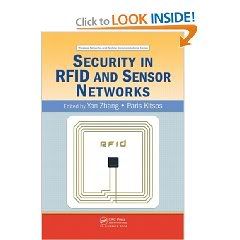
Security in RFID and Sensor Networks

Security in RFID and Sensor Networks

Product Description

Interest in Radio Frequency Identification (RFID) and Wireless Sensor Networks (WSNs) recently exploded globally in both industry and academia, but security is one of the key issues standing in the way of broad deployment of RFID and WSN systems. Broken down into easily navigable parts, this cutting-edge book offers a comprehensive discussion on the fundamentals, security challenges, and solutions in RFID, WSNs, and integrated RFID & WSNs. Complete with several detailed case studies, this essential reference includes practical examples for intuitive understanding and necessary information to assist professionals, engineers, and researchers involved in the security of RFID and WSNs.

About the Author

Simula Research Laboratory, Lysaker, Norway Hellenic Open University, Patras, Greece

download

19 Deadly Sins of Software Security


19 Deadly Sins of Software Security

This essential book for all software developers–regardless of platform, language, or type of application–outlines the «19 deadly sins» of software security and shows how to fix each one. Best-selling authors Michael Howard and David LeBlanc, who teach Microsoft employees how to secure code, have partnered with John Viega, the man who uncovered the 19 deadly programming sins to write this much-needed book.

Coverage includes:
Windows, UNIX, Linux, and Mac OS X
C, C++, C#, Java, PHP, Perl, and Visual Basic
Web, small client, and smart-client applications

download

Web And Information Security

Web And Information Security

Product Description
Web and Information Security consists of a collection of chapters written by leading experts in the field that describe state-of-the-art topics pertaining to Web and information systems security. In particular, security for the semantic Web, privacy, security policy management and emerging topics such as secure semantic grids and secure multimedia systems are also discussed.

As well as covering basic concepts of Web and information system security, this book provides new insights into the semantic Web field and its related security challenges. Web and Information Security is valuable as a reference book for senior undergraduate or graduate courses in information security which have special focuses on Web security. It is also useful for technologists, researchers, managers and developers who want to know more about emerging security technologies.

download

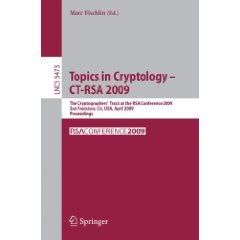
Topics in Cryptology - CT-RSA 2009: The Cryptographers’ Track at the RSA Conference 2009, San Francisco


Topics in Cryptology - CT-RSA 2009: The Cryptographers’ Track at the RSA Conference 2009, San Francisco

Product Description

This book constitutes the refereed proceedings of the Cryptographers’ Track at the RSA Conference 2009, CT-RSA 2009, held in San Francisco, CA, USA in April 2009. The 31 revised full papers presented were carefully reviewed and selected from 93 submissions. The papers are organized in topical sections on identity-based encryption, protocol analysis, two-party protocols, more than signatures, collisions for hash functions, cryptanalysis, alternative encryption, privacy and anonymity, efficiency improvements, multi-party protocols, security of encryption schemes as well as countermeasures and faults.

download

 
Super Ebook. Link My Suport Eagle Eye. By Suport Info Kesehatan BY Tips Healty Tested by Blogger Templates.